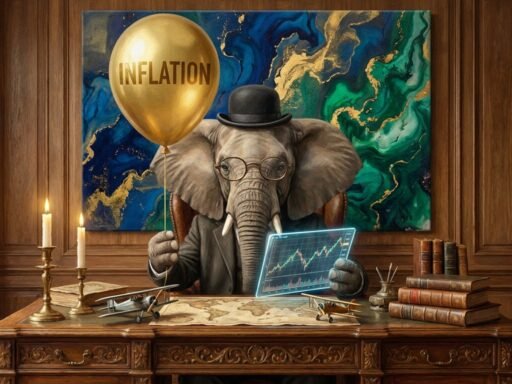



Global financial markets are navigating a complex environment defined by sticky inflation, escalating geopolitical conflicts, and an ongoing concentration of capital in the technology sector. For our Elephants evaluating their long-term portfolios, understanding the intersection of these macroeconomic variables is a necessary part of the due diligence process. Central banks are maintaining restrictive monetary policies to combat resilient consumer prices, while international trade dynamics are shifting in response to diplomatic summits and regional instability. Simultaneously, the energy sector is undergoing a recalibration as major corporations balance previous environmental commitments with the immediate demands of global energy security.
Monetary policy and the persistent inflation environment
The global economy is facing sustained inflationary pressures, driven heavily by energy and food costs. Data published by Bloomberg confirms the U.S. Consumer Price Index rose in April. This increase was led primarily by gasoline and groceries. The Producer Price Index also recorded a 0.5% gain in April, surpassing the 0.3% growth economists originally anticipated. This data environment complicates the Federal Reserve’s timeline for interest rate adjustments.
The United States Senate recently confirmed Kevin Warsh as the next Chair of the Federal Reserve. According to Bloomberg, Warsh takes over leadership during a period characterized by a “higher for longer” interest rate environment. The market response to the combination of strict central bank policy and rising oil prices resulted in a widespread global bond selloff. Bloomberg reports that sovereign yields climbed across major economies as fixed-income investors adjusted their portfolios to account for increased market volatility.
Financial leaders are expressing open concern regarding the current state of equity markets. JPMorgan Chase CEO Jamie Dimon and billionaire investor Ray Dalio issued warnings regarding market exuberance, suggesting participants are underestimating the economic risks associated with strained global debt cycles. Bloomberg notes that Dalio highlighted the potential for long-term market instability stemming from these debt levels.
Geopolitics, global trade, and supply chain disruptions
International trade and supply chains remain highly sensitive to diplomatic realignments and military conflicts. A massive diplomatic summit between U.S. President Donald Trump and Chinese President Xi Jinping recently concluded in Beijing. The U.S. delegation focused on securing the global semiconductor supply chains that currently bottleneck the artificial intelligence industry. According to France 24, the administration aims to increase market access for U.S. companies. The summit produced a temporary trade ceasefire, which included a pause on new U.S. tariffs and $250 billion in tentative Chinese purchasing agreements for American agricultural products.
In the Middle East, the geopolitical landscape continues to impact the energy sector and global logistics. Iran is restricting commercial passage in the Strait of Hormuz using specialized maritime blockade tactics. This action threatens 20% of the world’s petroleum liquids and keeps energy markets volatile. The resulting supply chain shocks are affecting specialized industries worldwide. DW News reports that India’s diamond processing industry in Surat is experiencing a slowdown in manufacturing activity due to skyrocketing freight costs and a decline in international demand.
European stability is also facing pressure from multiple directions. The protracted war in Ukraine has escalated as Russian forces resumed heavy strikes across Ukraine’s energy grid, directly threatening external power grids required for nuclear reactor cooling systems. Domestically, the U.K. Labour government is facing an internal crisis following ethics scandals and the resignation of key personnel just days after securing an electoral victory.
The maritime industry is concurrently managing a series of health emergencies. Outbreaks of Hantavirus and Norovirus on commercial vessels have forced mandatory quarantines and evacuations in the Canary Islands and Spain. These events add logistical hurdles to an already strained global shipping network.
The technology sector and artificial intelligence concentration
Equity markets are heavily dependent on the performance of the artificial intelligence sector. Bloomberg reports that the upward trajectory of the S&P 500 is fueled primarily by large-cap technology firms and developments in AI infrastructure. While major indices have reached record highs, market breadth remains narrow. Investors are currently weighing this AI-driven momentum against the reality of sticky inflation and high corporate valuations.
Financial product offerings are expanding rapidly to capture specialized technology investments. The DRAM ETF experienced a significant price surge during its first month of trading, reflecting targeted investor interest in semiconductor assets. Bloomberg also notes that Corgi set a new industry record by launching 34 exchange-traded funds simultaneously. This rollout indicates a broader shift toward niche investment strategies.
The integration of digital assets into traditional finance is accelerating through the use of stablecoins. Bloomberg reports that stablecoin transaction volume reached $2.3 trillion in the second quarter of 2024. These digital assets are increasingly utilized for cross-border payments and international remittances, allowing users to bypass the high fees and processing delays associated with conventional banking intermediaries.
Energy transitions, agriculture, and commodities
The energy sector is seeing a strategic return to traditional fossil fuel exploration. According to the Financial Times, major oil companies including ExxonMobil, BP, and Shell are expanding operations into new offshore frontiers like Guyana and Namibia. Rising global demand and geopolitical instability have prompted these firms to prioritize long-term energy security and shareholder returns over previous green energy commitments. Industry leaders argue this continued investment is required to offset the natural decline of existing oil fields.
The sustained increase in energy costs is affecting consumer purchasing power and agricultural production globally. Channel News Asia highlights that rising fuel costs have inflated the price of transportation and fertilizers in the Philippines, leading to a sharp increase in the retail price of rice. In Singapore, local farms are increasing their production output to support regional food security, but they face headwinds from rising electricity costs and unpredictable weather patterns.
Governments are actively intervening in commodity markets to manage national trade balances. India recently more than doubled its import tariffs on gold and silver. Channel News Asia reports the measure is designed to curb the high volume of precious metal imports and stabilize the domestic economy. Titan Company Ltd., India’s leading jewelry retailer, anticipates a brief period of cooling demand due to the new curbs. However, Bloomberg notes the company expects a quick recovery based on consistent demand generated by the country’s extensive wedding and festive seasons.
In Europe, agricultural producers are restructuring supply chains to ensure stable incomes. France 24 reports that farmers in western France established a cooperative-owned supermarket model to bypass industrial distributors. By controlling the retail operations, the cooperative establishes fixed prices based on actual production costs rather than commodity market speculation.
Institutional expansion into sports and regional corporate shifts
Private equity is actively transforming professional sports into a recognized institutional asset class. Bloomberg covered comments from Alan Waxman, CEO of Sixth Street, detailing the firm’s strategic expansion into the global sports market. Sixth Street recently secured a 360 million euro agreement to develop businesses at Real Madrid’s Santiago Bernabéu Stadium and acquired 25% of FC Barcelona’s domestic television rights. Waxman emphasized that these assets are attractive to institutional investors due to their non-correlated returns and resilient revenue streams from media and sponsorships.
Consolidation is also occurring at the youth sports level. The Wall Street Journal reports that Black Bear Sports Group is rapidly acquiring dozens of ice rinks and governing the local teams within them. This vertically integrated business model has sparked debate among families who argue the consolidation reduces competition and allows for significant price increases in team fees.
In the banking sector, regulatory frameworks are under intense scrutiny following recent financial failures. UBS CEO Sergio Ermotti is actively pushing back against the Swiss government’s proposals for more stringent capital requirements. As reported by the Financial Times, Ermotti argues that the downfall of Credit Suisse was driven by a crisis of liquidity and management, not a lack of capital. He warned that imposing excessive regulatory burdens beyond international standards could undermine the competitiveness of Switzerland as a global financial center.
Elephant Conclusions for the Herd
The current macroeconomic environment requires the Herd to maintain strict discipline and patience. The combination of sticky inflation and high interest rates means the cost of capital will remain elevated. Equity markets are heavily reliant on the continued growth of the artificial intelligence sector. While this concentration has produced high short-term returns, historical data suggests narrow market breadth introduces significant volatility risks.
The pivot by major energy corporations back toward traditional fossil fuel exploration indicates a long-term expectation of sustained global oil demand. Geopolitical tensions in the Middle East and the continued disruptions in shipping lanes confirm that energy supply chains remain highly vulnerable to sudden shocks. Investors must recognize that elevated fuel costs directly impact consumer spending power and corporate profit margins across unrelated sectors.
Due diligence is currently best applied to evaluating the true operational costs of companies within a portfolio. High inflation and supply chain restructuring require businesses to have strong pricing power to maintain their margins. As institutional capital flows into non-traditional sectors like professional sports and specialized ETFs, the Herd should focus on the fundamentals of resilient revenue streams rather than following immediate market exuberance. Maintaining a long-term perspective allows Elephants to navigate periods of high volatility without reacting to temporary market pressures.
This article was generated by AI based on news reporting from the past week. Please perform your own due diligence before making investment decisions.